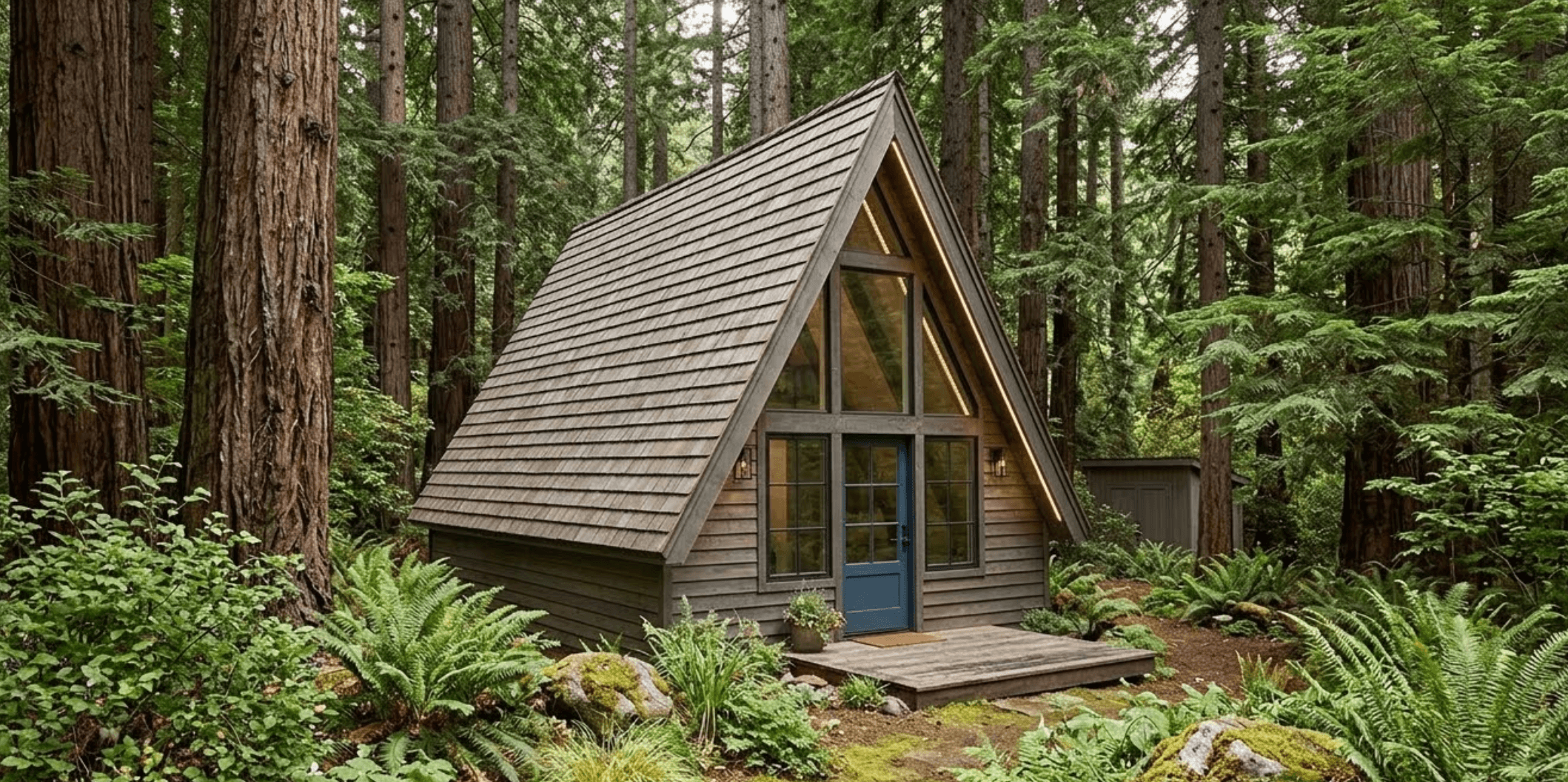
Guide
ADU Types Explained: Detached, Attached, JADU, and Garage Conversions (2026)
Detached, attached, garage conversion or JADU? How each California ADU type differs on size, height, cost and rules, and which one fits your lot in 2026.
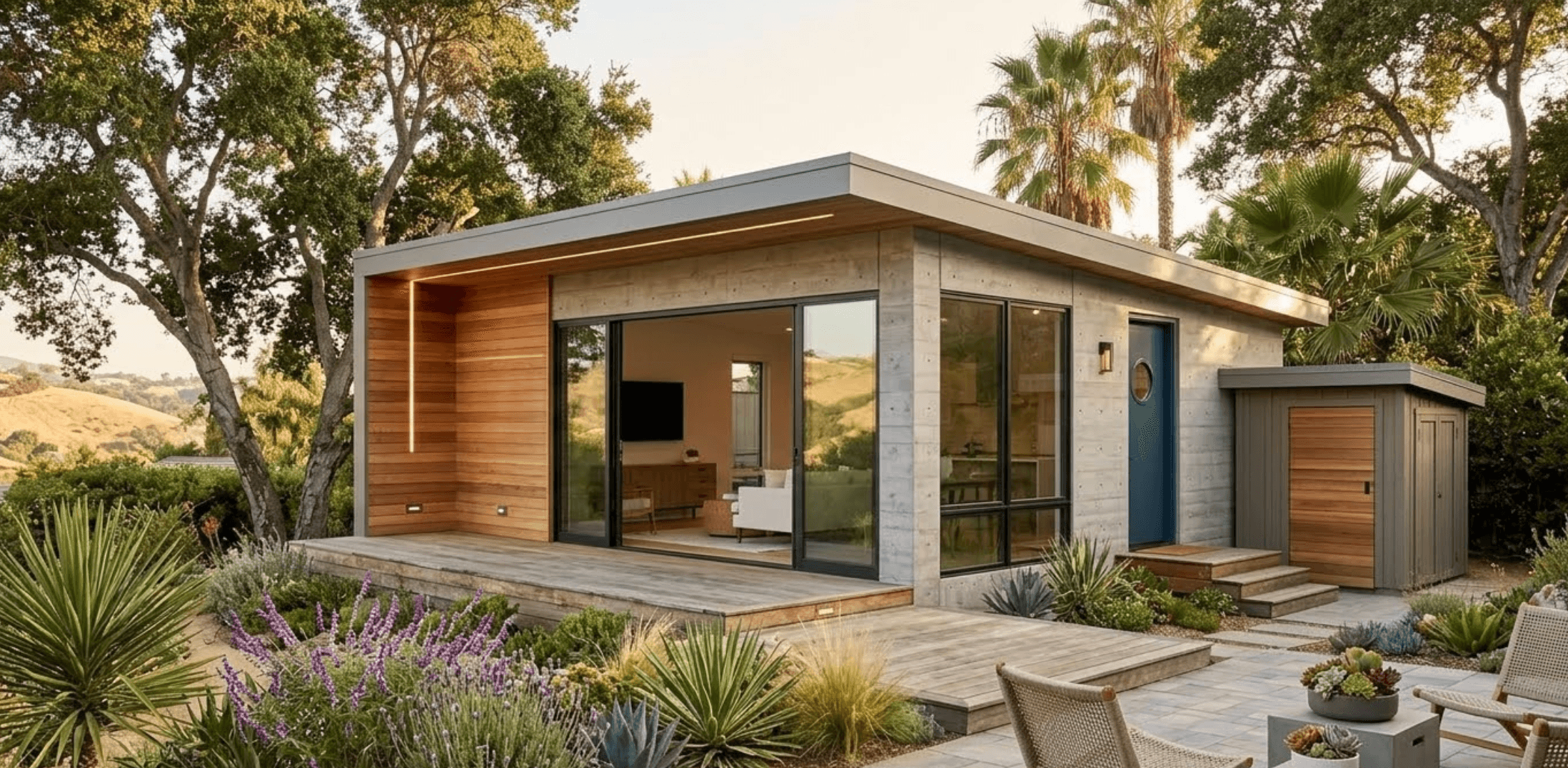
California recognizes four main ADU types: a detached ADU, an attached ADU, a conversion of existing space such as a garage, and a junior ADU (JADU) inside the home. They differ mainly in size limits, cost and privacy. On a single-family lot you do not have to pick just one: state law lets you combine a conversion ADU, a JADU and a new detached ADU of up to 800 sq ft, for up to three units.
Key takeaways
- ›Detached ADUs cost the most but offer the most privacy; cities must allow at least 16 ft of height.
- ›Garage and other conversions are usually the cheapest full ADU and need no extra setbacks.
- ›A JADU is capped at 500 sq ft inside the home; owner-occupancy can be required only if it shares a bathroom.
- ›Up to three units are possible on one single-family lot: conversion ADU + JADU + detached ADU.
What is a detached ADU?
A detached ADU is a freestanding unit separate from the main house, either new or a converted accessory building.
Size: Most cities cap detached ADUs at 1,200 sq ft. State law sets a floor: a city's maximum can be no lower than 850 sq ft for a studio or one bedroom, or 1,000 sq ft for two or more bedrooms, and every city must allow at least an 800 sq ft ADU with 4 ft side and rear setbacks.
Height: At least 16 ft, rising to 18 ft within half a mile of major transit (plus 2 ft to match the main home's roof pitch) or on a lot with a multistory multifamily building. Many cities go higher: San Jose allows 24 ft for a two-story detached ADU, Berkeley allows 20 ft outside its Hillside Overlay, and Sacramento follows the zone height, 35 ft in R-1.
Setbacks: No more than 4 ft from side and rear lot lines. Front setbacks cannot be used to block an 800 sq ft ADU.
Best for: Rental income and privacy. The downside is cost: a new foundation, roof and utility runs make it the most expensive type.
What is an attached ADU?
An attached ADU shares at least one wall with the main home, usually as an addition.
Size: Cities typically limit attached ADUs to 50% of the main home's living area, with a 1,200 sq ft cap. The 800 sq ft state floor still applies, so a small house does not shrink your allowance below that. Long Beach, for example, allows 50% of the home or 800 sq ft, whichever is more.
Height: Up to 25 ft or the zone's height limit, whichever is lower. That makes a second-story ADU over an attached garage possible in many cities.
Best for: Lots without backyard room, or owners who want family close by. The tradeoff is shared walls and sound.
How does a garage conversion ADU work?
A conversion turns existing legal space, most often a garage, into an ADU. The slab, walls and roof already exist, so costs are lower.
Size: Limited by the existing footprint. A two-car garage usually yields a studio or a small one-bedroom. Some cities allow a small addition for an entry; Oakland allows 150 sq ft on its Category One conversions.
Setbacks: None beyond the existing structure's. A garage on the property line can be converted where it stands.
Parking: If you convert or demolish a garage for an ADU, the city cannot make you replace those spaces, wherever the lot is.
Best for: Tighter budgets. Common cost surprises are panel upgrades, insulation, windows and slab work.
What is a JADU (junior ADU)?
A JADU is a unit of up to 500 sq ft of interior space created within a single-family home. It needs its own exterior entrance and at least an efficiency kitchen. It can share a bathroom with the main house.
Owner-occupancy: Under AB 1154 (2025), a city can require the owner to live on site only if the JADU shares a bathroom with the main home. A JADU with its own bathroom has no owner-occupancy requirement. JADUs cannot be used as short-term rentals.
Best for: A spare suite near an exterior door, often for a parent or adult child. At 500 sq ft or less it is exempt from school impact fees (SB 543). The limit is size: a studio at most.
How do the four ADU types compare?
| Type | Typical max size | Height floor under state law | Owner-occupancy |
|---|---|---|---|
| Detached ADU | 1,200 sq ft in most cities (800 sq ft always allowed) | 16 ft; 18 ft near transit (+2 ft roof pitch) or on a multistory multifamily lot | Not allowed for ADUs |
| Attached ADU | 50% of home, up to 1,200 sq ft (800 sq ft always allowed) | 25 ft or zone limit, whichever is lower | Not allowed for ADUs |
| Conversion (garage, etc.) | Existing footprint | Existing structure | Not allowed for ADUs |
| JADU | 500 sq ft | Inside the home | Only if bathroom is shared |
For build costs by type and city, see our ADU cost guide and the California ADU cost index.
Can you build more than one ADU type on the same lot?
Yes. On a single-family lot, state law (Gov. Code §66323) requires cities to allow one ADU converted from existing space, one JADU, and one new detached ADU of up to 800 sq ft with 4 ft side and rear setbacks. On multifamily lots, SB 1211 allows up to 8 detached ADUs (never more than the number of existing units) plus conversions for up to 25% of the existing units. See our guide to ADUs on multifamily property.
Worked example: a San Jose lot with three units
Say you own a San Jose home with an attached two-car garage and a deep backyard. Based on our San Jose data (as of 2026):
- ›Garage conversion ADU within the existing footprint, no new setbacks.
- ›JADU of 500 sq ft or less; with its own bathroom, no owner-occupancy rule can apply.
- ›Detached ADU: the state-guaranteed combination uses one of up to 800 sq ft. San Jose allows 4 ft side and rear setbacks and 24 ft for two stories.
Build costs run $300 to $500 per sq ft and garage conversions $100,000 to $200,000. Staying under 750 sq ft avoids impact fees, and the Preapproved ADU program is the fastest permit path. Run your numbers with the cost calculator and check what fits with the size calculator.
Which ADU type should you choose?
- ›Rental income first: a detached ADU usually rents best. Compare cities such as Los Angeles and Fresno in the ROI calculator, since rents differ widely.
- ›Budget first: a garage conversion or JADU.
- ›Housing family: a JADU or attached ADU.
- ›Small lot: a conversion or attached addition may be the only fit.
Read your city's page (start at the California hub or compare cities), then walk the lot with a designer. Our guides on hiring an ADU contractor and California ADU laws cover the next steps.
Sources
Free Service
Ready to Start Your ADU Project?
Get free quotes from licensed ADU contractors in your city. No obligation, takes 2 minutes.
Get Free Contractor Quotes