Guide
Can You Sell an ADU Separately in California? (AB 1033)
In most California cities you can't sell an ADU apart from the main home. AB 1033 lets cities opt in to condo sales. Here's how it works and what to do instead.
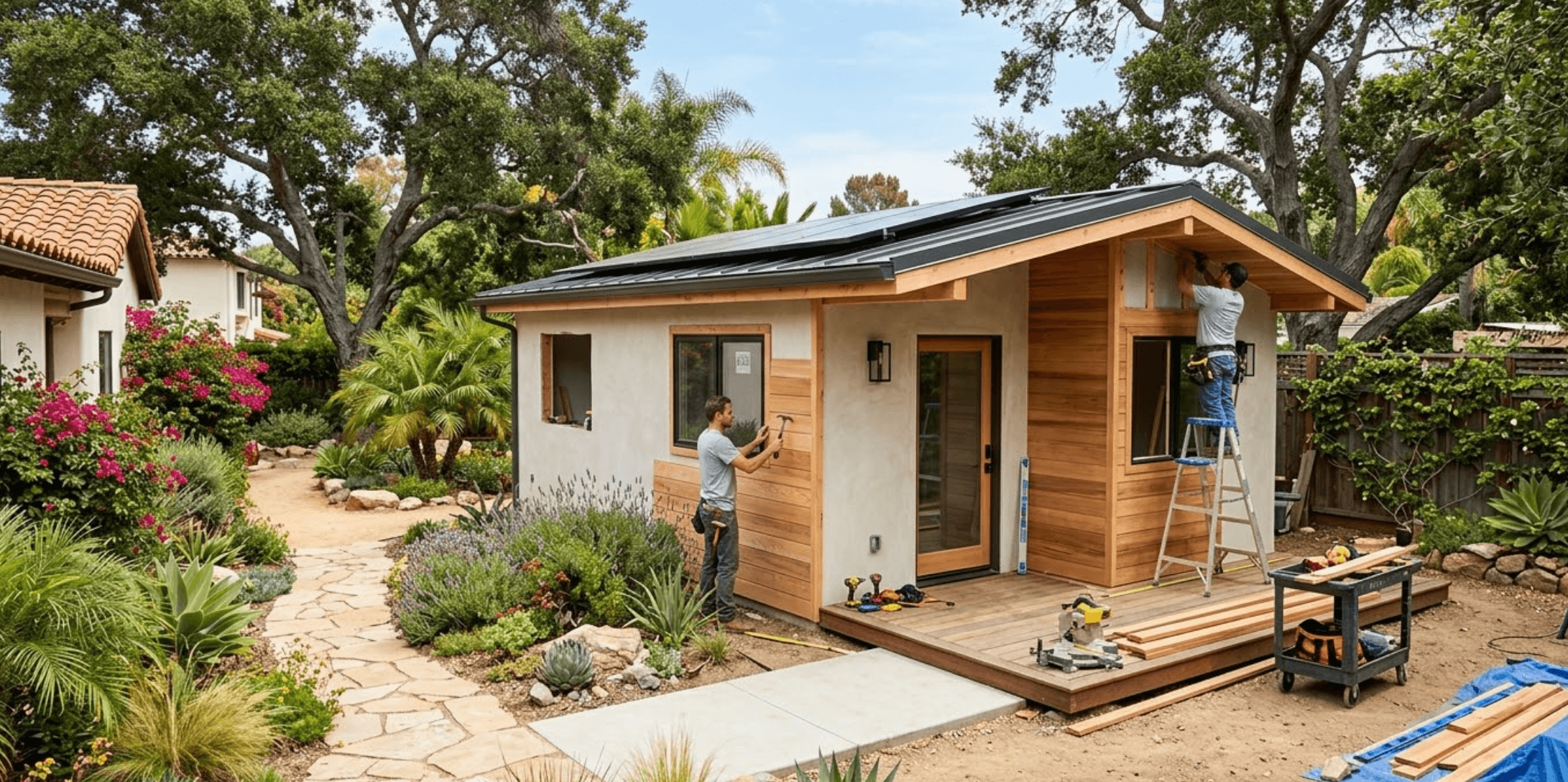
In most of California, no. An ADU stays tied to the main home, so you can sell the whole property but not the ADU by itself. The exception is AB 1033: since January 1, 2024, a city or county can adopt a local ordinance that lets owners convert an ADU into a condominium and sell it separately, but only if that city has opted in.
Key takeaways
- ›AB 1033 (2023, effective January 1, 2024) is opt-in. Separate ADU sales are only possible where your city or county has adopted a local ordinance.
- ›San Jose was an early adopter in 2024. For any other city, check with the planning department before you plan around a sale.
- ›A separate sale requires a legal condominium: a condo plan, a safety inspection, notice to utilities, and lienholder consent before recording.
- ›Where condo sales aren't allowed, your options are selling the whole property (ADU income included) or looking at an SB 9 lot split.
Can you sell an ADU separately from the house in California?
Only in a city or county that has adopted an AB 1033 ordinance. State ADU law has long treated an ADU as an accessory unit on the same lot as a primary home. Cities could, and most still do, prohibit selling it apart from that home.
AB 1033 changed that by giving local governments a choice. It doesn't require any city to allow separate sales. It gives each city the option. Our statewide summary of California ADU laws lists it as a local opt-in for that reason.
Most California cities have not adopted it. San Jose was an early adopter in 2024. We don't list other cities here because adoptions change and we can't confirm each one, so check with your city directly. Look for "ADU condominium" or "AB 1033" on the planning department's site or ask at the permit counter.
What does AB 1033 require to sell an ADU as a condo?
Even in an opt-in city, you can't just list the ADU on the market. The ADU and the main home have to become two legal condominium units. Under AB 1033, that process includes:
- ›Creating a condominium under the Subdivision Map Act and the Davis-Stirling Common Interest Development Act. The lot becomes a common interest development, usually with shared ownership of the land and an owners' association.
- ›A condominium plan that defines each unit and the common areas, recorded with the county.
- ›A safety inspection of the ADU before the condo is created.
- ›Notice to utilities serving the property, so each unit's service can be set up properly.
- ›Lienholder consent before the condo plan is recorded. If you have a mortgage or HELOC on the property, your lender has to agree in writing.
Lienholder consent is where many projects stall. A lender that holds a loan on the whole lot has to approve splitting its collateral into two units. Talk to your lender early, before you pay for a condo plan.
Local ordinances can add their own requirements on top of the state list, so read your city's ordinance in full.
Is there an exception for nonprofit-built ADUs?
Yes, a narrow one. Before AB 1033, AB 587 (2019) created an exception that lets ADUs built by a qualified nonprofit be sold separately to qualifying low-income buyers. It applies to affordable housing programs run by those nonprofits, not to ADUs a homeowner builds on their own lot.
If you're not working with a qualified nonprofit and your city hasn't adopted AB 1033, the default rule applies: the ADU can't be sold apart from the main home.
What are your options if your city doesn't allow ADU condo sales?
You have three realistic paths.
1. Sell the whole property, with the ADU as an income feature
This is the most common route. A permitted ADU can add value to the sale because buyers can use it for rental income, family, or a home office. When you list, show the permit, the certificate of occupancy, and any rent history. A buyer's lender and appraiser will want those.
2. Split the lot under SB 9
SB 9 (effective 2022) lets many single-family lots be split into two lots, each of which can be sold. It's a different law from ADU law with its own rules, and it doesn't turn an existing ADU into a separate parcel automatically. See our comparison of SB 9 vs. an ADU to see which fits your lot.
3. Keep the ADU and rent it
If your goal is to get money out of the ADU, renting it may beat selling. Our rent vs. sell calculator and ROI calculator help you compare. Our guide to ADU rental income covers what to expect.
Example: selling a San Jose property with a detached ADU
Say you own a home in San Jose with a permitted 750 sq ft detached ADU. You have two paths.
Sell the whole property. Based on our San Jose data as of 2026, ADUs there rent for roughly $2,200–$5,500 a month, and a finished ADU adds an estimated $250,000–$500,000 to property value in the Silicon Valley market. A buyer can underwrite that rent, so you're selling a house plus an income stream.
Sell the ADU as a condo. Because San Jose adopted an AB 1033 ordinance, you could instead pursue a condo conversion. You'd need a condo plan, a safety inspection, notice to utilities, and your lender's consent, and you'd then share the lot with the ADU's buyer under a common interest development. Budget for the surveyor, attorney, and recording costs, and confirm the current ordinance and fees with the city first.
For many owners, the condo route makes sense only when they want to keep living in the main home and cash out the ADU. If you plan to move anyway, selling the whole property is simpler.
What about other cities?
In cities like Los Angeles, San Diego, Oakland, Sacramento, San Francisco, and Long Beach, check the city's current ordinance before assuming either way. Rules differ city by city and change often, and adopting AB 1033 is optional. Each city page links to the official ADU department so you can confirm.
If you're still deciding whether to build, keep resale in mind from the start. A permitted ADU built to code, with its own address and clear utility setup, is easier to sell as part of the property and easier to convert later if your city opts in. Use the cost calculator to size the budget, and compare cities on the California ADU hub.
Frequently asked questions
Can I put the ADU in a different name than the main house? Not as a separate parcel unless your city allows condo conversion under AB 1033. Both units stay on one title otherwise.
Does AB 1033 apply to JADUs? AB 1033 is written for ADUs. A JADU is built inside the main home, and the city's ordinance will say what it covers. Ask your planning department.
Can my city require that I live on the property? Not for an ADU. AB 976 (2023) bars owner-occupancy requirements for ADUs. For a JADU, owner-occupancy can be required only if it shares a bathroom with the main home.
Sources
- ›AB 1033 (2023): ADU sale or separate conveyance
- ›California Government Code §66323: ADUs allowed per lot
- ›HCD: Accessory Dwelling Units
- ›HCD Accessory Dwelling Unit Handbook
- ›City of San Jose: Accessory Dwelling Units
- ›San Jose rent and value figures: ADUByCity city data for San Jose, as of 2026
Free Service
Ready to Start Your ADU Project?
Get free quotes from licensed ADU contractors in your city. No obligation, takes 2 minutes.
Get Free Contractor Quotes