Guide
California ADU Laws in 2026: What Changed and What Applies Now
The California ADU rules in force in 2026: units per lot, size, height, setbacks, fees, permit deadlines, and the 2024-2025 bills that changed them.
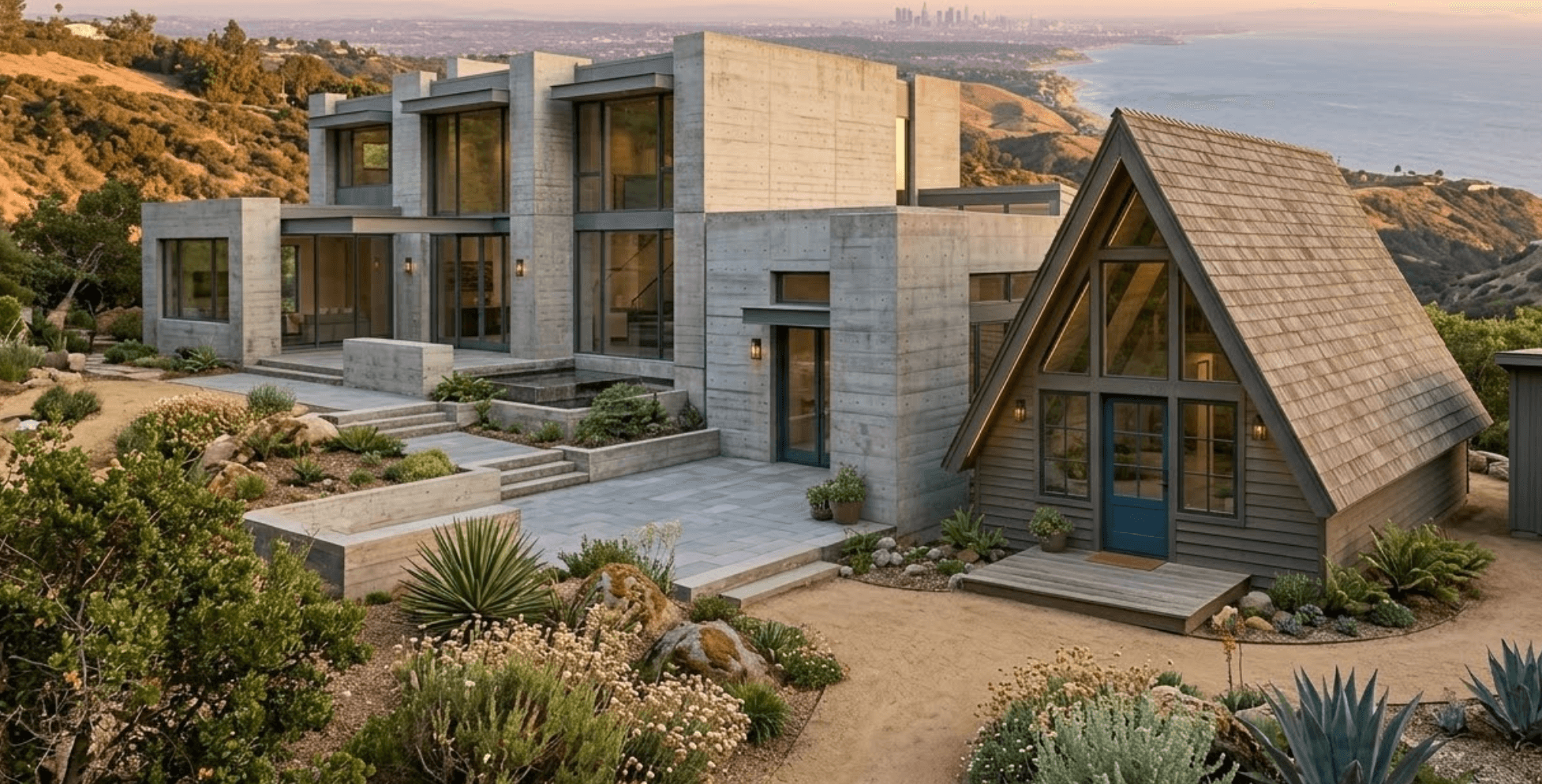
In 2026, California law lets most single-family lots have three units on top of the main home's space: an ADU converted from existing space, a junior ADU (JADU), and a new detached ADU of up to 800 sq ft. Cities must decide on a complete application within 60 days, cannot charge impact fees on units under 750 sq ft, and cannot require you to live on the property. Your city can be more generous than these rules, but not stricter.
Key takeaways
- ›Up to three units per single-family lot, and up to 8 detached ADUs on a lot with an existing apartment building (SB 1211).
- ›Cities have 15 business days to confirm your application is complete and 60 days to approve or deny it (SB 543).
- ›Owner-occupancy can only be required for a JADU that shares a bathroom with the main home (AB 976, AB 1154).
- ›Unpermitted ADUs built before 2020 now have a legalization path (AB 2533).
The state's ADU rules were moved into a new chapter of the Government Code in 2024, so older guides that cite section 65852.2 point to law that now lives at Government Code sections 66310 to 66342 (SB 477). The rules themselves did not change in that move.
How many ADUs can I build on my lot in California?
On a lot with a single-family home, cities must allow all three of these together (Gov. Code §66323):
- ›One ADU created inside the existing house or an existing accessory structure, such as a garage conversion.
- ›One JADU of up to 500 sq ft inside the house.
- ›One new detached ADU of up to 800 sq ft with 4 ft side and rear setbacks.
On a lot with an existing multifamily building, SB 1211 (2024) raised the limit on detached ADUs from two to eight, capped at the number of existing units. Owners can also convert non-livable space such as storage rooms, garages, and attics into ADUs: at least one, and up to 25% of the existing unit count. Our guide to adding ADUs to a multifamily property works through the math.
How big and how tall can an ADU be?
Cities set their own maximum size, but state law puts a floor under it. A city must allow at least 850 sq ft for a studio or one-bedroom ADU and 1,000 sq ft for two or more bedrooms, and it can never block an 800 sq ft unit with lot coverage, floor area, or open space rules (Gov. Code §66321). Many cities go further: Los Angeles and San Diego allow 1,200 sq ft detached units, while Glendale and Ontario cap them at 1,000 sq ft.
Height limits were raised in 2022 by AB 2221 and SB 897:
| ADU type | Minimum height a city must allow |
|---|---|
| Detached, most lots | 16 ft |
| Detached, within half a mile of major transit | 18 ft, plus 2 ft to match the main home's roof pitch |
| Detached, on a lot with a multistory multifamily building | 18 ft |
| Attached to the main home | 25 ft or the zone's height limit, whichever is lower |
What setbacks can a city require?
For a new ADU, side and rear setbacks can be no more than 4 ft. Converting an existing legal structure, or rebuilding one in the same footprint, needs no additional setback. AB 2221 also stopped cities from using front setbacks to block an 800 sq ft ADU. Our ADU setback guide covers edge cases like corner lots and easements.
How long does an ADU permit take?
SB 543 (2025, effective January 1, 2026) added a completeness deadline. A city now has 15 business days to tell you whether your application is complete. If it misses that deadline, the application is deemed complete. From there the city has 60 days to approve or deny it, with no public hearing (Gov. Code §66317). If it denies the application, it must explain in writing what to fix.
Since AB 1332 (2023), every city must run a pre-approved ADU plan program, and applications using a pre-approved plan must be decided within 30 days. Sacramento, San Jose, and Los Angeles have large plan libraries. Each city page on this site links to its local program where we found one. See the permit process guide for a step-by-step timeline.
What fees can a city charge for an ADU?
- ›Impact fees: none for ADUs under 750 sq ft. Larger ADUs pay a share proportional to the main home's size (Gov. Code §66324).
- ›School fees: SB 543 exempts ADUs and JADUs of 500 sq ft or less of interior livable space.
- ›Utility connection fees: cities cannot require a new or separate utility connection, or charge a connection fee, for most conversion ADUs and JADUs.
- ›Permit and plan check fees are still set locally and vary a lot. Compare them with the permit fee estimator.
Do I have to live on the property?
No, not for an ADU. The temporary ban on owner-occupancy requirements became permanent with AB 976 (2023). For JADUs, AB 1154 (2025) narrowed the rule: a city can require the owner to live on site only if the JADU shares a bathroom with the main home. AB 1154 also bars JADUs from being used as short-term rentals. Many cities separately ban ADU rentals shorter than 30 days, so check before listing a unit on a vacation rental site.
Can I sell an ADU separately?
Only if your city has opted in. AB 1033 (2023) lets cities allow ADUs to be sold as condominiums, but it is a local choice. Most cities have not adopted it yet. Our guide on selling an ADU separately explains the requirements, and SB 9 vs. ADU covers the lot-split alternative.
What if my ADU was built without permits?
AB 2533 (2024) extended California's ADU amnesty to units built before January 1, 2020. A city cannot deny a permit to legalize one of these units for building code violations unless the unit is a health and safety hazard, and it cannot require you to fix nonconforming zoning conditions. See how to legalize an unpermitted ADU.
What still varies by city?
State law sets minimums, so several things still differ from one city to the next:
- ›Maximum size above the state floor: 1,000 sq ft in Redding, 1,200 sq ft in Oakland, 1,500 sq ft in Menifee.
- ›Permit fees: set locally. Compare every city in the comparison table.
- ›Design standards: objective standards on materials or roof pitch are allowed, which can rule out some prefab models.
- ›Coastal and fire zones: coastal cities like Santa Monica and Carlsbad may need a coastal development permit. Very high fire hazard zones can bring extra fire-hardening requirements.
- ›Rental rules: local rent control and short-term rental bans apply to ADUs differently in each city.
What should I do before starting an ADU project in 2026?
- ›Look up your city on the California city index to see its local limits and fees.
- ›Check whether your city has pre-approved plans. They are the fastest route to a permit.
- ›Price the project with the ADU cost calculator and read how much an ADU costs.
- ›Confirm the current rules with your planning department before you pay for plans. City ordinances are often amended after new state laws take effect.
We keep a running summary of the statewide rules on every city page and update this guide when new ADU bills are signed. The next round of bills from the 2026 legislative session would take effect January 1, 2027.
Sources
- ›California Government Code §§66310–66342: ADU and JADU law
- ›HCD Accessory Dwelling Unit Handbook
- ›SB 1211 (2024): ADUs on multifamily lots
- ›AB 2533 (2024): unpermitted ADUs
- ›SB 543 (2025): completeness deadline and school fee exemption
- ›AB 1154 (2025): JADU owner-occupancy and short-term rentals
- ›AB 1033 (2023): selling ADUs as condominiums
Free Service
Ready to Start Your ADU Project?
Get free quotes from licensed ADU contractors in your city. No obligation, takes 2 minutes.
Get Free Contractor Quotes